tinya.org

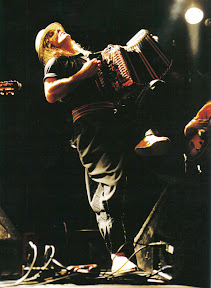
Sie bezeichnen sich als die “wahren Journalisten Kinshasas” – Staff Benda Bilili. Im November wird ihnen der “Artist Award” der WOMEX in Kopenhagen überreicht.

Mit ihrem Debut-Album “Tres Tres Fort” stürmten sie Anfang des Jahres die Musikwelt. Ihre Songs zeichnen sich durch eine erfrischende Originalität aus, die selbstverständlich Fahrt aufnimmt aus der Musiktradition des Kongo. Staff Benda Bilili wecken beim Publikum auch deshalb Interesse, weil sie als Gruppe etwas noch nie Dagewesenes repräsentieren – ihre Songs erzählen vom Leben auf der Straße, von Waisenkindern und Prostituierten. Sie erzählen ihre eigenen, gelebten Geschichten und Realitäten. Die Straßen Kinshasas machen sie in klapprigen, selbstgebauten Gefährten unsicher. Längst nicht aus Langeweile, sondern aus Notwenigkeit, denn einige der Musiker sind teilweise durch Polio gelähmt. 

Nun wurde bekannt gegeben, dass ihnen zur WOMEX im November in Kopenhagen einer der begehrtesten Trophäen in der Weltmusikszene übergeben werden soll: der “Artist Award”.

Comments Off on Die Weltmusikmesse WOMEX zeichnet Staff Benda Bilili mit dem “Artist Award” aus

13 Jun, 2009

TINYA Podcast #42: Musik unter Zensur

Posted by: Redaktion In: Radio

Sonntag, 21. Juni 2009   18 Uhr   Radio Corax [live stream]

TINYA Podcast #42 [

Audio clip: Adobe Flash Player (version 9 or above) is required to play this audio clip. Download the latest version here. You also need to have JavaScript enabled in your browser.

]

Das, was heute unter der Rubrik “Weltmusik” angesammelt wird, beruht auf zumeist höchst virtuosen Rezepturen. Es werden Genre zusammengewürfelt, deren Qualität außer Frage steht. Genre, mit obendrein oft spannenden Sozialgeschichten und Kontexten. Eine Spielart der “Weltmusik” ist es nun, aus mehreren dieser Stilrichtungen eine möglichst tanzbare, möglichst schräge und nie dagewesene Neufusion zu kreiieren. Sowas wie: Rumba-Raggae-Samba-Rhythmus plus Tango-Bandoneon und westafrikanischer Ngoni, das ganze angeführt von einer Obertonsängerin. Übertriebene Sache. Doch eines wird an diesem Szenario klar. Dieser Art von Musik fehlt die Idee, fehlt der Beweggrund, fehlt der Aufschrei, fehlt die Aktion und das Aufbegehren. Für all jene, die sich gegen Musik mit rein kommerziellen Absichten aussprechen, ist diese “Weltmusik” ohne aufrichtige Intention wertlos. 

Wieviel Courage zum Musik machen aber in manchen Teilen der Welt abgefordert wird, das zeigt die kommende TINYA Sendung. Denn Musik als Ausdrucksmöglichkeit ist im Stande viele Menschen in ihren Bann zu ziehen. Dort, wo Regierungen Probleme mit dem Begriff “Freiheit” haben, werden immerwieder Musiker zensiert, verfolgt, verhaftet und sogar getötet. Eine Sendung, gewidmet all jenen Musikern, die mit ihren Liedern gegen Unterdrückung, Willkür und Ungerechtigkeit ankämpfen.

Mit einem Interview mit den iranischen Sängerinnen Mahsa & Marjan Vahdat und der Journalistin Marie Korpe, Direktorin der Nichtregierungsorganisation Freemuse (freemuse.org).

Comments Off on TINYA Podcast #42: Musik unter Zensur

23 May, 2009

TINYA Podcast #41: Musik aus Argentinien

Posted by: Redaktion In: // Podcasts|Radio

Sonntag, 24. Mai 2009   18 Uhr   Radio Corax [live-stream]

TINYA Podcast #42 [

Audio clip: Adobe Flash Player (version 9 or above) is required to play this audio clip. Download the latest version here. You also need to have JavaScript enabled in your browser.

]

“Bäumchen”, Arbolito, ist eine der bekanntesten Fusion Bands Argentiniens. Sie tragen einen unschuldigen Namen, sind aber ganz und gar nicht auf den Mund gefallen. Das, was als leichtfüßige Musik daher kommt, ist ein Titel, der sich “Sobran” nennt – “Sie sind überflüssig”. Arbolito zählen in dem Song all das auf, woran es in einem der fortschrittlichsten Länder Lateinamerikas alles fehlt: “Schamgefühl und Wahrheit, in den Köpfen fehlt es an Freiheit, es fehlt am Geld um zu reisen, an Betrieben und sogar am täglichen Brot.”

Es sind soziale Schieflagen, die Fragwürdigkeit politischer Kompetenzen und die Unzufriedenheit über Regierungsentscheidung, die das Land ausbremsen, es auf der Stelle treten lassen. Musik ist in Argentinien auch für die indigenen Völker ein Sprachrohr, durch das sie zunächst ihre kulturellen Wurzeln präsentieren und gleichzeitig auf ihre Rechte aufmerksam machen. 

TINYA legt in der aktuellen Sendung den Weg zwischen Buenos Aires und dem Norden Argentiniens zurück: Mit Musik aus Buenos Aires von Arbolito, Onda Vaga, Mariana Baraj und der Mapuche-Sängerin Beatriz Pichi Malen. Außerdem erklingen Lieder der Volksgruppe Wichi sowie aus der Quebrada de Humahuaca und Santiago de Estero.

Comments Off on TINYA Podcast #41: Musik aus Argentinien

10 May, 2009

Masala Welt-Beat-Festival Hannover 6.-17. May 2009

Posted by: Christina Fellenberg In: // Festivals

Von Renato Borghetti

Since 1995 the festival brings together artists from all over the world. This year the festival focuses on recent movements in the World Music scene, mostly from urban contexts. Masala means mixture and the mixture is revealed in the appropriation of different musical styles to create something new. Not only musical structures or instruments are adopted accordingly but also the symbolic dimensions. Thus, the initially feared homogenization of music by globalisation processes turns out to be a diversification due to the particular individual and local appropriations.

Moreover, the Masala festival is of interest with regard to the festivalisation of music, an actual topic in ethnomusicology. Festivals can be understood as a place of negotiation of culture.

The regional accent of this year lies upon Europe with Jazz from Sweden, Folk from Ireland as well as Afropop from Portugal. There will also be music from South America, Africa and Asia.

Look here for the entire program of the festival:

http://www.masala-festival.de/aktuell/programm.shtml

Comments Off on Masala Welt-Beat-Festival Hannover 6.-17. May 2009

01 May, 2009

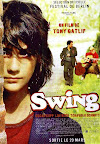
Music of the Roma and the Manouche. Two films by Tony Gatlif.

Posted by: Christina Fellenberg In: Movies

Von Films of Tony Gatlif: Tchavalo Schmitt in “Swing”

Tony Gatlif (*1948 Algiers) is a French director, actor, screenwriter and composer. His father was a Kabyle, a Berber from Algeria, and his mother a Roma. Both cultural backgrounds had a strong impact on his work and inspired him to make many of his films. After the war in the 1960s he left Algeria and emigrated to France.

What is remarkable about Gatlifs films is the broad space he concedes to the development of music; be it an improvisation of a mixed ensemble in a Manouche-caravan, or a possession ritual accompanied by music in North Africa (Exils 2005). And this is only one reason why his works are interesting in terms of ethnomusicology. Through the particular characters we get to know the social conditions of the musicians in question, the history of an ethnic group as well as the function of music in concrete cultural contexts.

Gadjo Dilo 1997

France. 97 min.

Von Films of Tony Gatlif

At heart, it is the story of a quest. Stephane, a young Frenchman is travelling throughout Romania in order to find a Roma singer which he knows from a cassette recording he inherited from his father.

This film constitutes the last one within a trilogy about the Roma. The first two films were Les Princes and Latcho Drom. In the Romani language Gadjo refers to a stranger. It is thus a distinguishing notion for non-Roma people. In this film gadjo dilo means “crazy man” or “crazy stranger”.

Many situations, in which music plays a crucial role are depicted. Thus, we hear marriage songs and dance music as well as ballads or songs narrating the difficulties of the Roma such as the partially violent conflict between Romanians and Roma. Here you can find a subtitled example of a ballad, interpreted a cappella by a female singer.
http://www.youtube.com/watch?v=83q2slH1sjI

Swing 2001

France. 87 min.

Music: Mandino Reinhardt, Tchavalo Schmitt, Abdellatif Chaarani and others.

We accompany Max, a little French boy, during one summer. In a suburb of Strasbourg, he gets in touch with the intoxicating and stirring Manouche music and his first love. Swing and Max are inseparable. Enthusiastic about the Manouche music he decides to take guitar lessons with Miraldo, who is played by one of the greatest Manouche jazz musicians Tchavolo Schmitt. The traditional “Les yeux noirs” (The black eyes): http://www.youtube.com/watch?v=6D_lHNbZvVk

Manouche, which literally means human is the self-designation of the Sinti group living in France and adjacent countries. Their presence in Western Europe is documented since the 15th century . One of the most famous Manouche musicians was Django Reinhardt.

Tony Gatlif about the Manouche Swing: “It is a music of the air, of space. The hand of Tchavalo which is running over the neck of his guitar, one may say that a bird is flying away! This music which could be full of pain and fury turns out to be full of communicative gaiety. There is nostalgia, but without any gravity. It is a music that is not cute but beautiful. Blitheful and free like the little Swing. It is arrogant and dares going from one another while breaching the rhythm. […] Tchavalo is the heir to Django Reinhardt. The heir to the Manouche music. He has this liberty, this arrogance of the « not having » “

As Tony Gatlif embeds music in a social reality, we get an idea of the neighbourhood, of gender relationships and of the bother with bureaucratic forms. In the traditional songs which are orally transmitted, their experiences, hopes and outlook on reality are reflected.

The Puri Dai (Romani for the elder woman) sings:

Come, we’ll travel

We have spoken about it for so long

Then, we are all together

Then, we make music

We dance and drink.

Near the forest, we have set our wagon

Such beauty it is to be in the nature

When you see things wistfully

So, may your heart open up again.

Sometimes, the intercultural encounter, namely with Arab and Jewish music and with an Alsatian choir, turns out to be complicated, somehow funny and finally fruitful in many regards. For Tony Gatlif dialogue by means of music seems to be the underlying idea.

Extract from “Le chant de la paix“ (The song of peace)

Because he

whose heart has never burnt of love

who has never been a slave of love

will never know

the secrets of the hereafter,

will never know

the uniqueness of being one

(Translations from French: Christina Fellenberg)
Comments Off on Music of the Roma and the Manouche. Two films by Tony Gatlif.

Halsbrecherisch – Durchschlagend – Brachial: Orquesta Típica Fernández Fierro entwickeln eine eigene Sprache für Bandoneon, Violine, Klavier und Cello und interpretieren dabei den Tango völlig neu. 

Von Rezensionen

Wer auf der Suche nach neuen Bewegungen in der Tango Szene von Buenos Aires ist, der darf sich eines der drei Konzerte von Fernandez Fierro in Deutschland nicht entgehen lassen.

24. April  Wuppertal  CaféADA und bei MAREev

01. Mai  Hannover  Tango Impuls

02. Mai  Schwerin  Rittersaal

Comments Off on Lichterloh – Orquesta Típica Fernández Fierro setzt den Tango in Flammen
Von International Workshop Hanover

From 24th -28th June 2009 the Ethnomusicology Department of the University for Music and Drama Hanover/ Germany is organizing an international workshop focusing on “Ethnomusicological Research Today”. There are 16 places for Ph.D. candidates. The workshop will be directed by the renowned ethnomusicologists Prof. Dr. Raimund Vogels (Hanover) and Prof. Dr. Philip V. Bohlman (Chicago/Hanover).

The workshop mainly aims at promoting exchange on ethnomusicological Ph.D. projects throughout Europe and at furthering critical debate on recent research. The working language will be English.

Programme

24-06-09: Arrival

25 & 26-06-09: Presentation of papers

27-06-09: Critical discussion of recent ethnomusicological publications

(see list below).

28-06-09: Departure

The organizers invite applications from Ph.D. students irrespective of the actual stage of Ph.D. research, of the region of study, or the thematic focus. If needed, the University for Music and Drama will try to contribute to travel expenses.

The application deadline is 5th of May 2009. Required application documents:

1 Abstract of 250 words

1 CV

1 preliminary estimate of travel costs.

Please send your applications or any questions by e-mail to Kerstin Klenke, M.A.

kerstin.klenke@hmt-hannover.de

Those who want to take part in the workshop as an auditor without a presentation are welcome, but should register until 5th of May 2009 as well.

Participants are required to read the selected publications for discussion:

  • Nettl, Bruno: The Study of Ethnomusicology. Thirty-One Issues and Concepts. New Edition. Urbana, University of Illinois Press 2005.

  • Stobart, Henry (Hg.): The New (Ethno)Musicologies. Lanham, Scarecrow Press 2008.

  • Barz, Gregory, und Timothy Cooley (Hg.): Shadows in the Field. New Perspectives for Fieldwork in Ethnomusicology. Second Edition. New York, Oxford University Press 2008.

  • Bohlman, Philip V.: World Music. A Very Short Introduction. Oxford, Oxford University Press 2002.

  • Feld, Steven: Sound and Sentiment. Birds, Weeping, Poetics, and Song in Kaluli Expression. Philadelphia, University of Pennsylvania Press 1982.

  • Stokes, Martin: The Arabesk Debate. Music and Musicians in Modern Turkey. Oxford, Oxford University Press 1992.

  • Vogels, Raimund: The Big Drum was Beaten and the Force Moved East. Islamic Court Music in Northeast Nigeria. In Print. Manuscript will be sent to participants.

  • Rommen, Timothy. „Mek Some Noise”. Gospel Music and the Ethics of Style in Trinidad. Berkeley, University of California Press 2007.

  • Hahn, Tomie: Sensational Knowledge. Embodying Culture through Japanese Dance. Middletown, Wesleyan University Press 2007.

  • Hesselink, Nathan: P’ungmul. South Korean Drumming and Dance. Chicago, University of Chicago Press 2006.
Comments Off on Ethnomusicological Research Today International Doctoral Workshop

08 Apr, 2009

TINYA Podcast #40: Naturklänge

Posted by: Redaktion In: // Podcasts|Radio

26. April 2009  18 Uhr  auf Radio Corax  [live stream]

TINYA Podcast #40 [

Audio clip: Adobe Flash Player (version 9 or above) is required to play this audio clip. Download the latest version here. You also need to have JavaScript enabled in your browser.

]

Dass auch mit Steinen, Muscheln und Tierknochen Musik gemacht werden kann, das beweist die aktuelle TINYA Sendung. Sie hören dazu ein Gespräch mit Hannes Heyne von der Klanghütte in Dresden. Er baut nicht nur Musikinstrumente nach, sondern erfindet sogar selbst welche. Passend zum Thema “Naturklänge” hören Sie weiterhin Aufnahmen von der CD “Musica Sveciae. Fornnordiska klanger – the sound of prehispanic scandinavia”. Eine Zusammenstellung von archaischen Klängen aus dem Jahre 1991. Mit Klangsteinen, Luren, Schraper, Mundbögen und noch vielen weiteren seltenen Musikinstrumenten. Zusammengehalten wird die TINYA Sendung diesmal von Musik aus der Herzegovina: Aufnahmen von Erntegesängen und Liebeslieder, aufgenommen in den Jahren zw. 1957 und 1974 von dem Musikethnologen Dieter Christensen.

Comments Off on TINYA Podcast #40: Naturklänge

01 Apr, 2009

Music as a remedy in Mongolian ritual

Posted by: Christina Fellenberg In: Movies

The Story of the weeping camel

German-Mongolian documentary film. 2003. 87 min.

Von The story of the weeping camel

Let’s take a look to a gem of a film produced by Byambasuren Davaa. The Mongolian director studied at the Hochschule für Fernsehen und Film in Munich as did her Italian co-director and cameraman Luigi Falorni. Basically, the film is a semi-documentary. Although shot in a calm and sensitive documentary style, a story is smoothly developed.

During one spring time we accompany a nomadic family in the Gobi desert who lives primarily from breeding camel. In the course of the film every day life is displayed. We can watch the production of wool, the preparation of salty milk tea, the playing of games and storytelling. After the birth of the first camel colt trouble suddenly breaks out. Another camel mare is having her first baby with some complications. That might be one reason she rejects her colt. As the family gets more and more upset regarding the weakness of the little camel, they send their children to the Province centre to look for a morin huur player, the only one who might be able to help.

The morin huur, an indigenous horse-headed fiddle whose origin is based on a legend, is played on the occasion of rituals as well as for accompanying dances and different kinds of songs or for imitating the sounds of horses. In 2003 its traditional repertory was placed under the protection of the UNESCO Masterpieces of the Oral and Intangible Heritage of Humanity:

http://www.unesco.de/ike-liste.html?&L=0

Mongols have special musical remedies related to the four types of domestic animals.

For camels, it is necessary to play the huur and sing a song that is believed to have originated with an elder who understood the animal language. It tells how a camel ran away to give birth to her calf and how the camel herder spent several days looking for her.[…] As the herder took away her calf, the camel wept and sang. When the mother camel hears this song, she makes a wailing noise, weeps large tears, and gives the calf milk”.


In the following scenes we witness an ancient ritual which helps the camel mare to accept and suckle her baby. The ritual music is performed on the morin huur serving partly as bourdon, partly as “long song” when alternating with the women’s chant. The female singer slowly repeats asemantic syllables in a “long song”-style with a voluminous voice and vibrato ornamentation.

And what is more, in the course of the film we get a glimpse of the multifaceted musical genres of Mongolia such as work songs and sounds for animals, shell winding which harks back to the Tibetan Buddhist heritage, cheerful bogin duu (short song) within the family circle as well as urtin duu (long songs). The distinction between short and long songs is important in Mongolian music. The short song is rhythmically bound, syllabic and strophic whereas the melismatic, richly ornamented long song is metrically free and associated with festive ceremonies.

A lot of Mongolians still live a traditionally nomadic life. Nevertheless, after the political turn in the 1990s, Mongolia has undergone a lot of changes. Nomads are migrating to the cities. Consequently the number of nomads has decreased even though plenty of them still inhabit a yourte in the heart of the capital. Moreover, the film doesn’t conceal actual tendencies entailed by globalisation processes. There is the little boy longing for television at home after having seen it in a neighbour’s yourte. A satellite dish almost as big as the yourte has become a common accessory of the steppes in the mean time.

Due to the numerous close-ups scenes the spectator feels as if he was directly involved. Above all, Byambasuren Davaa made a film full of respect for the people whose lives she has depicted. As she was deeply touched by this issue in her childhood she had always wished to make a film about it. In an interview she argued that the film might be understood all over the world due to its universal themes such as longing for love, family cohesion and the relation between man and nature.

Trailer: http://www.youtube.com/watch?v=LpYXK-7szd8

[1] Pegg, Carole, 2001, Mongolian music, dance and oral narrative: performing diverse identities. Seattle u.a., S. 237

Comments Off on Music as a remedy in Mongolian ritual

29 Mar, 2009

Ethnomusicological Festival in Paris

Posted by: Christina Fellenberg In: // Festivals|News


Von Festival de l’Imaginaire

Since 1997, the Festival de l’Imaginaire is organized annually by the Maison des Cultures du monde in Paris. This year the performances take place from March 3rd – April 10th. The festival is an unique occasion to become acquainted with musicians and dancers from all over the world.

Here you can find the manifold program of this year:

http://www.mcm.asso.fr/site02/festival/infos.htm


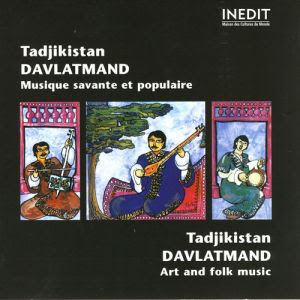
The institution – well known for its cultural commitment – also publishes in the field of ethnomusicology, namely the carefully conceived CD-collections INEDIT et TERRAINS. The booklets are in French and English.

Look here for downloading the entire catalogue of the collection: http://www.mcm.asso.fr/site02/inedit/catalogue.pdf

Von Festival de l’Imaginaire
Comments Off on Ethnomusicological Festival in Paris

Categories

Archives

Corax_Logo-klein